Health Insurance Trends
The PBM Challenge in Today's Market
With Mployer's Insights+ platform, employers can now evaluate their 401(k) offering with the same rigor as salary benchmarking, leading to a powerful edge in recruiting and retention.
June 16, 2025

The PBM Challenge in Today's Market

(An easy to understand guide)

Prescription drug costs have surged dramatically in recent years, placing increasing strain on employer-sponsored health plans. Between 2000 and 2020, retail prescription drug spending in the U.S. nearly doubled (a 91% increase) and continues to climb—outpacing most other healthcare cost categories. The rise stems from two primary factors: expensive new specialty therapies (like weight-loss and biologic treatments) and the opaque role of Pharmacy Benefit Managers (PBMs) in setting prices. What makes matters worse is that Americans pay dramatically more than people in other high-income nations—U.S. drug prices average 2.78 times higher than in 33 comparable countries, and brand-name drugs can cost more than four times as much. This steep cost trajectory and global overpayment emphasize why understanding and managing PBMs has become essential for employers aiming to control healthcare spend and protect employees.

How PBMs Actually Work

When an employer designs its health plan, it either chooses a PBM directly or selects a carrier that already has a PBM embedded in its plan. From there, the PBM takes control of the prescription drug benefit. They build the formulary—the list of drugs that are covered—and negotiate with manufacturers to decide which drugs make the list. By narrowing coverage to certain products, PBMs gain leverage to demand better deals. They also restrict which pharmacies are in-network, again concentrating volume to maximize bargaining power.

This means PBMs effectively set the market, costs, and tiers employees experience: whether a drug falls into Tier 1 with a $10 copay or Tier 4 with a 25% coinsurance is dictated by the PBM’s design. On the back end, PBMs collect rebates from drug makers. A rebate is essentially a kickback payment from the manufacturer to the PBM, offered in exchange for favorable placement of a drug on the formulary or higher expected utilization. For example, if two similar drugs treat the same condition, the manufacturer willing to pay a higher rebate is more likely to have their drug chosen. Some portion of these rebates is passed back to the employer to lower plan costs, but a significant share is often kept by the PBM—one of the biggest transparency concerns in the system

How Drug Tiers and Payment Structures Work

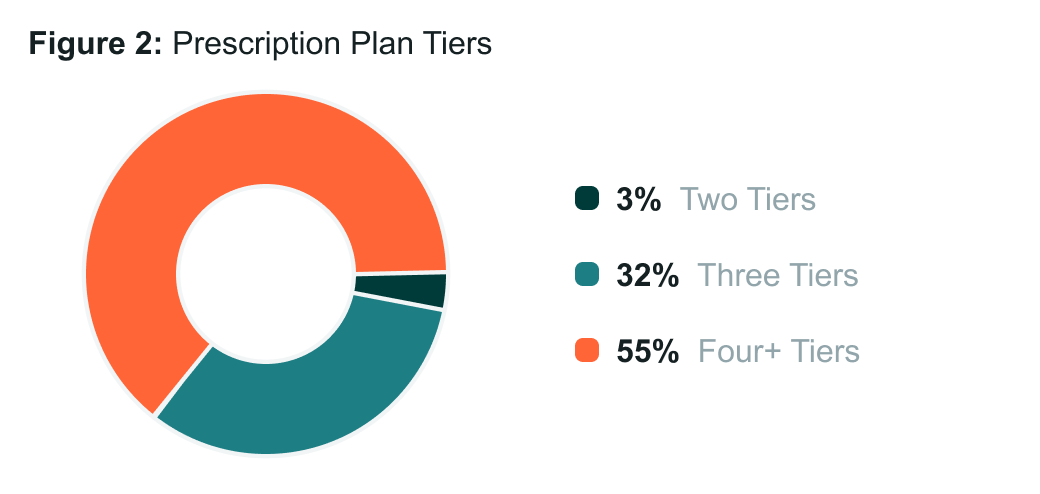
Most employer health plans organize prescription coverage into tiers, which determine both access and cost-sharing for employees.

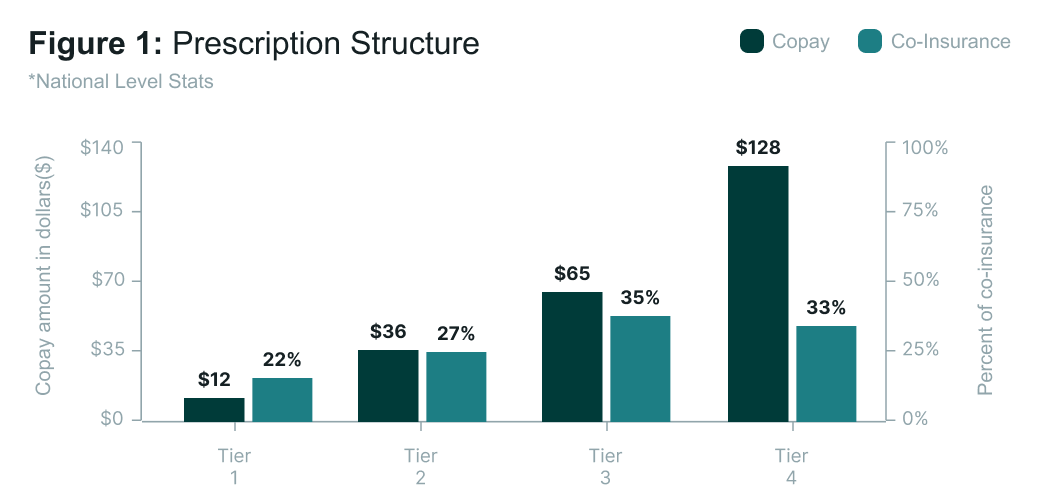
  • Tier 1 (Generics): Lowest-cost drugs, usually just a $10–$20 copay. They are widely accessible and often encouraged as first-line therapy.
  • Tier 2 (Preferred Brands): Brand-name drugs that PBMs have negotiated discounts on. Employees typically pay $30–$50 copays or around 20% coinsurance.
  • Tier 3 (Non-Preferred Brands): Higher-cost brand drugs not favored on the formulary. Employees may owe 40%+ coinsurance, leading to hundreds in out-of-pocket costs.
  • Tier 4 (Specialty Drugs): High-cost therapies for serious conditions like cancer or hemophilia. These usually require coinsurance (20–30%), which can mean thousands of dollars per month. Although they make up less than 2% of prescriptions, specialty drugs drive nearly half of total drug spending.

Copays vs. Coinsurance

  • A copay is a fixed, predictable dollar amount per prescription.
  • Coinsurance is a percentage of the total drug cost until the deductible or out-of-pocket maximum is reached. While it helps share costs, it creates unpredictability—especially for specialty drugs, where 25% coinsurance could mean $250 on a $1,000 medication or much more on therapies costing thousands each month.

For employers, understanding how tiers and cost-sharing are structured is critical, since they directly affect both plan expenses and employee affordability.
High-Cost Drugs and Their Outsized Impact

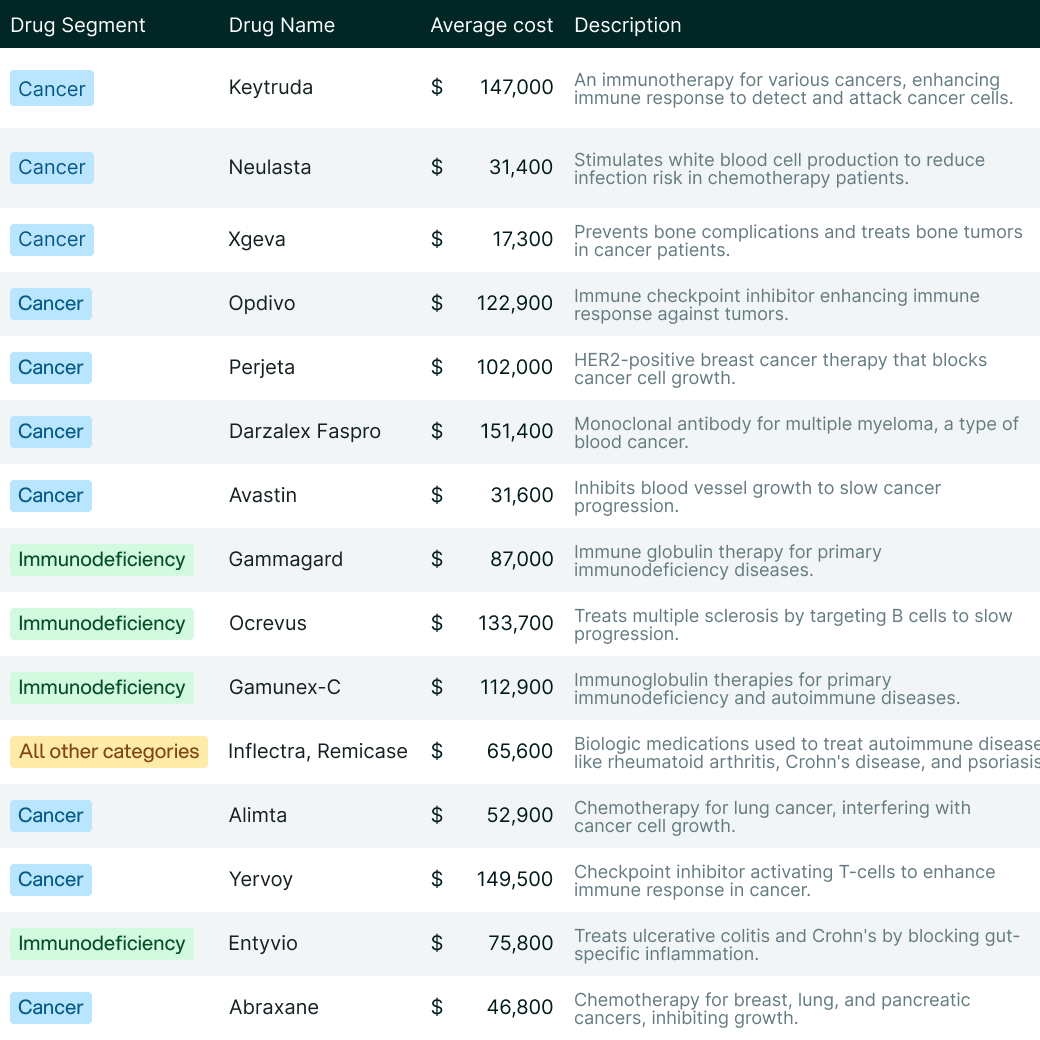
While high-cost drugs represent only a small fraction of total prescriptions, their impact on employer health plans is staggering. Specialty medications—such as those for cancer, hemophilia, and autoimmune disorders—account for less than 2% of prescriptions but drive close to 50% of all drug spending. Their costs have grown at double-digit rates year over year, fueled by new biologics, gene therapies, and infusion-based treatments that can run into hundreds of thousands of dollars annually. According to Sun Life’s High-Cost Claims Report, in many catastrophic claim categories like hemophilia or leukemia, prescription drugs make up more than 90% of the total cost of care. For employers, this means a single claimant on a specialty drug can dramatically shift overall plan spend, making pharmacy benefits one of the most volatile and financially significant areas to manage.
How Carriers Handle High-Cost Drugs

Carriers cover most FDA-approved specialty drugs but tightly manage access and cost. They use formularies to decide which drugs are included (and on what tier), require prior authorization or step therapy before approving treatment, and often restrict dispensing to their own specialty pharmacy networks. Coverage is generally limited to drugs deemed medically necessary, while experimental or non-formulary drugs are excluded unless appealed. For employees, this can mean higher coinsurance, delays in approval, and fewer choices on where prescriptions can be filled.

Who Controls the PBM Market—and Who’s Challenging It

Today, most carriers are tied to the “Big Three” PBMs, which together control more than 75% of the market:
  • Aetna/CVS → CVS Caremark
  • Cigna → Express Scripts
  • UnitedHealthcare → OptumRx
  • Anthem/Blue Cross (varies by region) → Caremark or Express Scripts

This consolidation means that for many employers, pharmacy benefits are automatically bundled with one of these large PBMs, leaving little room for visibility or flexibility.  

The remaining 25% is made up of disruptors offering more transparent models. Players like SmithRx (pass-through pricing with detailed reporting), MedOne (independent PBM with customizable formularies and full rebate pass-through), and Mark Cuban’s Cost Plus Drugs (a direct-to-consumer model selling drugs at cost plus a small margin) are challenging the status quo. For employers, knowing which PBM their carrier relies on—and whether a carve-out to one of these disruptors is possible—can be a critical step in controlling pharmacy costs.

Legislation and Reform Efforts

In recent years, lawmakers have increasingly targeted the opaque practices of PBMs, introducing multiple federal bills like the Pharmacy Benefit Manager Transparency Act (S. 127, 2023) and the PBM Transparency Act of 2025 (S. 526). These aim to ban spread pricing, require full rebate pass-through, and mandate detailed reporting—but none have passed into law yet. Similarly, a 2025 House bill dubbed the PBM Reform Act proposes greater transparency around Medicare Part D contracts and delinking PBM compensation from drug prices, but it remains pending in committee.

At the state level, all 50 states have enacted some degree of PBM regulation. Few states have gone further: for example, Iowa is considering a law imposing minimum pharmacy dispensing fees, and Arkansas passed legislation curbing PBMs’ ownership of pharmacies—though that law has been temporarily blocked by a federal judge

In short: there's plenty of activity at both federal and state levels—but no sweeping reforms have become law yet, leaving employers to manage PBM challenges proactively on their own.

Be Educated: Key Questions to Ask Your Broker

  1. Who is our PBM, and is it bundled with our carrier?
  1. Do we receive 100% of rebates, or are they retained?
  1. Can we carve out our PBM given our size and funding model?
  1. Which high-cost drugs are driving our spend?
  1. Do we get claim-level reporting from our PBM? (often not)
  1. What specialty drug management strategies are in place?
  1. How does our plan compare to industry peers?

Closing Thoughts

Prescription drug costs are no longer a side issue—they’re a central driver of employer healthcare spend. The combination of high-cost specialty therapies and the opaque role PBMs play in setting formularies, controlling access, and managing rebates makes this one of the most complex and consequential areas of benefit management. For employers, the path forward starts with awareness: knowing which PBM you’re tied to, how rebates flow, which drugs are shaping your spend, and what levers you have to push for transparency or carve out alternatives.

While legislation at the federal and state levels may eventually bring more clarity and accountability to the PBM market, employers cannot afford to wait. By asking sharper questions, exploring disruptive PBM models, and partnering with brokers who understand this space, employers can take meaningful steps today to control costs and support employees more effectively.

Bottom line: Prescription drug costs are only going up. Employers that engage now—by digging into the details and holding PBMs and carriers accountable—will be best positioned to protect both their budgets and their people.
Economy
The Employment Situation for December 2024
The latest economic release from the Bureau of Labor Statistics reports that the U.S. job market rebounded after a sluggish month in October to add 227 thousand new jobs last month as the unemployment rate ticked up slightly to 4.2%.
December 6, 2024

Editor's Note: This report is based on survey data from November 2024 that was published in December 2024. This is the most recent data available. (Source: Bureau of Labor Statistics)

The national unemployment rate average ticked up one-tenth of a point to 4.2% last month as US employers added 227 thousand jobs, outpacing the approximate 200 thousand jobs that economists were predicting. 

The number of unemployed people held comparably steady at about 7.1 million, as well, with about 1.7 million (17%) qualifying as long-term unemployed. The number of unemployed people has risen by around 800 thousand over the last 12 months, while the number of long-term unemployed has risen by about 500 thousand over the same time period.

Those figures, however, do not account for the nearly 5.5 million people who are not counted as unemployed because they have not been actively looking for work in the past 4 weeks. 

Also, it’s worth noting that about 4.5 million people are currently employed part time for economic reasons, which is up from about 4 million people who fell into that category a year ago. 

Altogether, the figures show general resilience and a strong rebound from last month’s hurricane and strike-induced dip, but the full economic picture is not entirely sunny, and evidence of some softening in the labor market persists. 

That said, there’s not much of said evidence to be found in the jobs numbers, however, with 227 net new payroll entries over the month, but it could be argued that the concentration of new jobs across a relatively few industries is less than ideal.

For example, the healthcare industry and leisure & hospitality industry each added about 54 thousand net jobs, which collectively account for nearly half of the total job additions last month. Further, both the healthcare and leisure & hospitality job figures last month were essentially on par with their monthly averages, meaning that last month’s payroll additions were essentially right on the trendline.

Employment figures in government and transportation equipment manufacturing each rose by about a little over 30 thousand jobs, while the social assistance industry saw a net addition of about 20 thousand jobs. 

There was little to no noteworthy change in the other industries with the exception of the retail industry which saw a net loss of nearly 30 thousand jobs over the course of November. 

Average hourly pay continued its general upward trend climbing 13 cents to $35.61 per hour while the average workweek climbed one-tenth of an hour to 34.3 hours per week. 

Average hourly pay is up 4% over the last 12 months.

Mployer’s Take

In light of this most recent batch of economic data, last month’s report of only 12 thousand new jobs looks more like an outlier than evidence of a rapid cooling in the job market.

Although the upward revision to last month’s numbers of about 36 thousand jobs could look huge by some measures (plus 200% upward revision) or fairly insignificant by others (post-revision new payroll entries in October were still only about 25% of the average 186 thousand new jobs added each month over the last 12), the reality is that last month’s performance reflected hurricane and strike related data aberrations more than changing macroeconomic conditions. 

Despite this positive jobs report, markets have not been dissuaded from believing another interest rate cut is likely in store when Federal Reserve leadership convenes again later this month.

Still, the outlook is not entirely positive across the board, with a decreasing number in job postings across nearly every industry, for example, indicating the job market is expected to continue cooling - which is in part why continued rate cuts are forecast. 

What likely matters more at the moment than the bigger picture environmental factors that are shaping the current economic trends, however, are the political and regulatory factors that will begin impacting the labor market and US/world economies in general when control of the White House and US senate changes hands in the new year.

Even with Republicans in control of all 3 branches of the federal government, there remains a great deal of uncertainty both about which proposals they will pursue and prioritize, many of which can have significant impacts to the economy and labor force (e.g. tariffs, taxes, collective bargaining legislation).

That lack of clarity will begin coming into focus in 2025.

Check out the Mployer blog here.

Economy
The Market Employment Summary for November 2024
Each month, Mployer Advisor breaks down the Bureau of Labor Statistics’ most recent State Employment and Unemployment Summary to highlight some employment trends across various markets. This is an overview of November’s report. 
November 20, 2024

Editor's Note: This report is based on survey data from October 2024 that was published in November 2024. This is the most recent data available. (Source: Bureau of Labor Statistics)

There was no significant change in the national unemployment rate, which held steady at 4.1% over the month, nor was there any meaningful movement in national payroll figures, which fell far short of expectations and amounted to a net increase of only about 12,000 jobs.

The vast majority of states saw comparably little change in their in-state unemployment rates and payroll figures, although 3 states recorded an increase in unemployment throughout October (while 1 state recorded an unemployment rate reduction) and 2 states recorded a net decrease in jobs. 

Below is the breakdown of the Bureau of Labor Statistics’ (BLS) market employment summary for October 2024.

States With the Highest Unemployment Rates

Washington DC had the highest unemployment rate among ‘states’ for the 6th month in a row - holding steady at 5.7% - joined this month by Nevada which saw its unemployment rate climb by one-tenth of a point over the month up from 5.6%.

California and Illinois are the only other states to have unemployment rates higher than the US national average. Those rates are currently 5.4% and 5.3%, respectively.

Over the course of the last month, Iowa is the only other state that saw its unemployment rate rise by a significant margin, rising from 2.9% to 3%.

In the last year, 25 states have seen their unemployment rates go up, led by South Carolina, Rhode Island, and Indiana with unemployment rate increases of 1.7%, 1.2%, and 0.9%, respectively over the last 12 months.

States With The Lowest Unemployment Rates

For the 10th consecutive month, South Dakota has recorded the lowest unemployment rate in the country, dropping one-tenth of a point to 1.9% after holding steady at 2% unemployment for several months prior.

Those figures put South Dakota’s unemployment rate nearly half a point below the next lowest unemployment rate among states, which is Vermont at 2.3%, followed by North Dakota and New Hampshire at 2.4% and 2.5%, respectively.

Besides South Dakota, the only other states to record a decrease in unemployment rate over October are Connecticut and Delaware, which saw their in-state unemployment rates reduced by 0.2% each last month.

Over the last year, 6 states in total have seen a net reduction in unemployment, with the largest unemployment rate decrease over the last 12 months being recorded by Connecticut (minus 1.2%), followed by Arizona (minus 0.6%), Maine and Wisconsin (minus 0.5%), Arkansas (minus 0.4%), and Kentucky (minus 0.2%).

States With New Job Losses

Florida and Washington state both recorded net job losses last month amounting to about 37 thousand jobs each representing 0.4% and 1% in-state workforce losses, respectively.

No state recorded net job losses over the last 12 months.

States With New Job Gains

No state recorded a significant net increase in jobs over the last month, but just over half of all states (27) recorded net job gains over the last year.

In terms of raw job figures, Texas saw the largest number of new job additions at about 275 thousand payroll entries through the last 12 months, followed by California at about 212 thousand, and New York and Florida at about 133 thousand net jobs each.

Idaho has the largest net job gains over the last year as a percentage of in-state workforce (plus 3.1%), followed by Missouri and South Carolina at plus 2.7% each.

Mployer’s Take

In some ways, this latest market employment report looks like a picture of stability at face value given that the unemployment and job numbers have barely budged since last month’s report.

What’s missing from the report, however, is consistency and predictability, as evidenced by the job forecasts exceeding the actual number of net new jobs recorded by a factor of 10. 

To be clear, these job numbers are difficult to take at face value, as well, in light of the disruptions to both data collection and hiring caused by external factors such as hurricanes and strikes that occurred when this data was being reported and compiled.

That said, given that the average monthly job growth over the past year has been nearly 200 thousand net new jobs per month, it is exceedingly unlikely that those external factors can account for the entirety of the shortfall. 

The labor market certainly seems to be continuing to soften to some degree, though the extent remains to be seen, but that softening was very much expected and in fact is an intended result of the interest rate hikes to help reduce inflation without triggering a recession. 

With inflation down to 2.6% annualized and no apparent imminent recession on the way, and with the Federal Reserve already having cut baseline interest rates by half a point over the last couple of months while signaling more cuts for 2025, the soft-landing sought by the Fed seems to have been successfully executed.

Of course, there is no hard cut-off date by which the success of the interest-rate-hiking campaign and the soft landing will ultimately be evaluated, and the current inertia of the labor market could result in continued softening even with interest rates already starting to come down.

While there is no set bookend for evaluating the Fed’s soft-landing, however, there likely is a bookend on Fed Chair Jerome Powell’s remaining time in his current role given that his term is set to expire in May of 2026.

Assuming Chairman Powell serves out the remainder of his term, which he appears intent to do, we can reasonably expect continuity at the Fed and whatever economic consistency that continuity helps foster for nearly another year and a half after power in the White House and US Senate changes hands in the new year.

The bigger questions in the nearer term are what new policies we are going to see as a result of the shifting power (e.g. tariffs, tax cuts, work visas, labor regulations) and how those policies affect the current economic trajectory and momentum.

We will be keeping an eye on those policies as they emerge and take shape through the governing process in the months ahead.

Looking for more exclusive content? Check out the Mployer blog.

Health Insurance Trends
3 Questions That Will Determine How The 2024 Elections Impact Employer-Sponsored Healthcare
Now that the 2024 elections are mostly in the books, how will the shifting balance of power affect employer-sponsored healthcare?
November 11, 2024

Key Takeaways

  • Will Republicans attempt ACA repeal again? It’s more entrenched now than when repeal failed last time and some intra-party calls for repeal have quieted and/or been replaced by calls to improve the ACA, although details are sparse about what kinds of improvements can be agreed upon and there may not be a consensus.
  • The incoming GOP election winners are likely to grant additional power and policy control to state governments, which may produce compliance complications for interstate employers and affect attraction and retention efforts in some areas of the country with some subsets of the workforce.
  • What will be the net effect on healthcare costs resulting from the bipartisan continuation of recent healthcare reforms like requiring increased transparency in hospital pricing and provider billing in combination with the reintroduction of privatization and consolidation-friendly policies that are less bi-partisan and more Republican specific?

ARTICLE | 3 Questions That Will Determine How The 2024 Elections Impact Employer-Sponsored Healthcare

The 2024 elections are now in the books, and while votes are still being counted and will continue being counted for the next week or two at least, there are only a few handfuls of races at this point where there remains much uncertainty about the outcome. 

As of this writing, control of the US House of Representatives has yet to be officially called, but in order to take the majority Democrats would essentially need to flip 6 of 8 swing districts that have yet to announce winners, all of which are seats held by Republicans currently, so it’s a tall order for Dems to say the least.

Given these odds and given that Donald Trump and a majority of Senate Republicans have already decisively won their respective elections, it is very likely the case that Republicans will soon control just about all the levers of power in the federal government, including a supermajority of Republican appointees on the Supreme Court. 

Although the Senate majority will not be filibuster-proof, which is the one check on power that Democratic politicians in the federal government will maintain over the next 2 years, it’s fair to say that Republicans have a pretty clear path for the foreseeable future to enact whatever policies they choose.

With that in mind, we wanted to take a look at the 3 most significant open questions concerning how the incoming GOP majority will govern with respect to the US healthcare system - specifically in terms of how such changes may impact employer-sponsored health insurance - in order to shine some light on where we may be heading in the coming term.

1. Is The Affordable Care Act On The Chopping Block?

One of the biggest unanswered questions at the moment with the greatest potential to impact employer-sponsored healthcare is whether or not the GOP will attempt again to repeal the Affordable Care Act, and if so, what if anything will they replace it with?

Of all the potential changes a future Trump administration and Republican Congress/Judiciary might make/allow, repealing the ACA may have the most far-reaching and significant implications from an employer’s perspective.

For employers, repeal of the ACA as-is would mean not only the elimination of penalties for failing to offer minimum-standard-meeting health insurance to employees (or possibly the reduction of those penalties in the event of repeal and replace), repeal of the ACA would also remove/reduce the minimum standards that those policies must meet in order to be brought to market in the first place.

From a practical standpoint, the elimination or reduced efficacy of the exchange system will likely have some major repercussions as well, as will ending coverage protection for people with pre-existing conditions, both of which will increase the perceived value of strong employer-sponsored benefit packages and can support talent attraction and retention efforts.

There are also a number of somewhat less significant potential outcomes that could be expected in the wake of ACA repeal and are still impactful enough to be worth noting, including reduced administrative requirements/costs and reduced or eliminated wellness program subsidies. 

The downsides to eliminating everything from subsidies to preexisting condition coverage protections and the exchanges themselves will be substantial, however, given that the number of uninsured people would climb significantly in each case and the costs resulting from their lack of preventative care and emergency room dependence will ultimately make its way to commercial group plans and employer bottom lines. 

To be clear, it is not at all a foregone conclusion that the GOP will use their control of government to repeal the ACA within the next couple of years. 

For one, the ACA was only about 7 years old the last time that the GOP was in power and initially attempted to repeal it, and it’s been about 7 years since then during which time ACA provisions and expectations have become all the more entrenched within our healthcare system. 

Further, while the outspoken calls for repeal of the ACA from both Republican leadership and Republican rank-and-file alike have never gone away entirely, they have become much quieter in recent years, perhaps partly in response to the pandemic and the attention it drew to both public and personal health matters.

There is certainly a degree of disagreement within the Republican party about the best path forward in terms of improving the US healthcare system, especially as it relates to the ACA, and in fact many individual Republican politicians have had different views on these matters at different times themselves, adding additional complication to the task of anticipating how it will play out when power transfers in the new year.

What Are Republican Leaders Saying About The ACA?

In a previous piece, we covered some of President-elect Donald Trump’s positions on various healthcare-related issues including the ACA as outlined by the actions he took during his previous administration as well as statements he made on the topic at the time and since.

Early in his first term, for example, Trump supported the attempted repeal of the ACA, but it is not at all certain that he will support doing so again given competing priorities and given that the healthcare exchanges and ACA infrastructure are further established and ingrained in our healthcare system now than when repeal last failed.

In fact, in a statement from March of this year, Trump said that he was not running to ‘terminate’ the ACA and instead wanted to improve it and make it less expensive, although he did not supply further detail as to how these goals would be accomplished.

During his first term, Trump did implement some ACA cost-saving measures such as allowing enhanced ACA direct enrollment through online brokers and reducing funding for outreach and enrollment assistance, but he also weakened individual mandate enforcement, resulting in reduced revenue to offset the costs of the program.

If cost-cutting is the goal and if they revive the strategy of reshaping the ACA via relatively small changes as opposed to a one-fell-swoop overhaul/repeal, it’s a good bet that the premium tax credits through the exchanges will not be renewed when they expire in 2025, for one.

Exempting employers from ACA contraception coverage requirements is another action the previous Trump administration took and the future Trump administration is likely to revisit, as is reinstating short-term non-ACA-compliant insurance options, as well.

Of course, Trump isn’t the only Republican leader who has offered somewhat mixed messages with regard to the future of the ACA.

After declaring ‘no Obamacare’ at a rally in Pennsylvania, when reports interpreted this statement as an indication of his intent to repeal the ACA, Johnson clarified that is not what he said.

Trump’s running mate and soon-to-be Vice President JD Vance, on the other hand, has signaled more direct support for the ACA, even telling an anecdote at the vice presidential debate about how his mother bought health insurance via Obamacare. 

That said, Vance has also floated proposals for plans that undermine and run counter to the ACA, like allowing health insurers to stratify their groups which would reduce premium expenses for younger and healthier people but would cause them to increase significantly for older people and people with pre-existing conditions.

Perhaps the biggest question mark about the future of the ACA involves the incoming Senate Majority leader. With Mitch McConnell set to step down as top Republican in the Senate, however, and with no obvious successor at the moment, there is no clear answer about how the ACA will be approached by the leader of the House of Congress that is likely to play the most significant role in determining the future of the ACA.

2. How Will Giving Additional Policy Power To States Affect In-State Employers?

One fairly consistent theme across much of the ideology expressed by Republicans has been giving more power to states in making policy decisions in many situations.

In Trump’s first term, we saw this transfer of power manifest via Medicaid block grants and allowing states to mandate work requirements, for example, and has reemerged in Trump’s promises for his second term as well, exemplified by the stated plan to dismantle the Department of Education and allow each state to manage its internal public education without much federal assistance or oversight.

As laws and regulations become decentralized, however, keeping up with compliance can become more cumbersome, especially for large employers operating in multiple states, and that problem gets amplified as the variance in rules between states grows over time. 

Furthermore, differences in policy from one state to another can have significant effects on attracting and retaining talent in some areas of the country, which can be a benefit to attraction and retention efforts in cases such as low/no income tax states, but state-level policy can be a detriment to talent attraction and attention when those policies are contentious and considered off-putting to various groups of potential candidates, especially when it comes to health issues.

There are more than a few such contentious state health-related policy considerations that can affect candidate perception of a potential relocation site including issues ranging from disability accommodations to gender-affirming care access and vaccine mandates, but there is no more contentious now-state-level healthcare issue than abortion, which has significant implications for employers not only with regard to talent recruitment but also family planning as it relates to business operational efficiency. 

While some Republican leaders have called for a national abortion ban over the last couple of years after the Supreme Court overturned Roe v. Wade, Trump has repeatedly stated that he favors leaving abortion up to the states and that he will not sign a national abortion ban.

Speaker Johnson, however, appears less opposed to a national abortion ban, but he recently stated that he thinks it would be too soon to introduce such a ban within the next year without having first built political consensus for such a measure.

Perhaps the biggest question marks surrounding these statements for both supporters and opponents of abortion rights, however, is whether or not the statements refer exclusively to an outright ban or if they also encompass achieving the same or similar results via other means, such as banning abortion drug mifepristone, enacting fetal personhood, and/or legislating additional abortion restrictions that don’t constitute a total national ban.

Even in the event of additional national abortion restrictions of some kind, however, it’s important to keep in mind that those restrictions are likely to set a minimum standard that states can then go beyond in terms of implementing additional restrictions if they elect to do so.

As a result, both the perception and the reality of abortion access and the correlated access to other reproductive healthcare may continue to grow as factors influencing candidates’ willingness to work in certain locations.

Further, a piecemeal approach to abortion and reproductive healthcare access across states will make issues involving contraception access all the more relevant, especially in places with more limited abortion access.

As already noted, Trump exempted employers from complying with ACA contraception requirements based on moral and religious grounds, which is a policy that seems likely to be reinstated. 

That policy, however, may make certain aspects of family planning considerably more complicated for a large number of employees, which in turn may negatively impact employers not only by shrinking the talent pool of labor willing to work for some employers in the first place but also by reducing the potential availability of the labor that is accessible to them as a result of employees having less control over if and when they have children.

3. Will Big Business Lead To Big Cost Savings?

In attempting to reform the healthcare system absent successfully repealing ACA, the first Trump administration turned much of its attention to addressing the rapidly rising costs of care.

Some of those cost-saving measures that were implemented were systemic reforms that share wide bi-partisan support such as efforts to lower prescription drug prices, increase cost transparency, and improve provider billing practices, all of which are goals that the Biden administration has pursued in the interim as well, so there shouldn’t be a much of a shift on these fronts when Trump retakes office.

The Biden administration, however, did not continue some other measures related to privatization and consolidation that the first Trump administration implemented with an aim to reduce healthcare expenses, for example promoting Medicare Advantage at the expense of Medicaid and showing a greater willingness to greenlight mergers and acquisitions across the healthcare business spectrum.

A second Trump administration is expected to continue its support for both Medicare Advantage and a robust M&A environment in the healthcare space, which will likely be a benefit to companies that are able to join forces and diversify via merger, but the ultimate impact on costs for employer-sponsored plans from these consolidations remains to be seen.

As healthcare and healthcare-adjacent companies consolidate, grow, and absorb accounts and market share over the next couple of years, employers would be wise to stay proactive in working with their insurance brokers and consultants to monitor how the shifting landscape may impact coverage going forward as policies change hands and terms and conditions evolve.

Mployer’s Take

There are several reasons that there are still major questions about how the GOP will approach healthcare despite the fact that the president-elect has previously held office and just completed a years-long campaign that included major media interviews, two debates, and quite a few political rallies.

In terms of historical data, we of course know what Trump did the last time he was president when he also happened to start the term with majority support in both Houses of Congress and the Supreme Court, but that evidence of action is somewhat incomplete given how much time and resources the GOP invested in repealing the ACA only to come up a few votes short. 

After unsuccessfully repealing and replacing the ACA, many of the other healthcare-related policy changes enacted in Trump’s first term felt more like afterthoughts than a fully formed representation of Republican healthcare goals at the time, and as noted above, full repeal of the ACA seems less likely now than it did then.

As for why we don’t have better information about Trump and the GOP’s healthcare plans going forward, the fault largely lies with the voters in a sense. Since election polling this cycle consistently revealed that healthcare was not one of the most pressing issues on voters’ minds, candidates up and down the ticket on both sides of the aisle largely neglected the topic on the campaign trail, and the media did the same for the same reason.

It’s most likely not the case, however, that healthcare became less of a priority to voters than it has been over the last 20 years, especially still living in the aftermath of a recent global pandemic. It’s probable that other issues like the economy, immigration, and abortion have become more urgent in recent years in a lot of voters’ minds and they simply jumped to the front of the line.

Regardless of why we know relatively little about the GOP’s healthcare priorities, assuming that Republicans do ultimately hold onto the House of Representatives when the final vote tally is complete, at this point it shouldn’t take long for those priorities to become clear.

Although their majorities will be slim in Congress, Republicans and Republicans alone are likely to be setting the agenda in a matter of months, and we’ll be back to weigh in with our take as those plans come into focus.

Economy
The Employment Situation for November 2024
The latest economic release from the Bureau of Labor Statistics reports that the U.S. added only 12 thousand new jobs last month, although multiple hurricanes hindered both job additions and data collection, while the unemployment rate held steady at 4.1%.
November 4, 2024

Editor's Note: This report is based on survey data from October 2024 that was published in November 2024. This is the most recent data available. (Source: Bureau of Labor Statistics)

The unemployment rate held steady at 4.1% for the second straight month, while US employers added around 12 thousand jobs, which was about 90% below growth estimates.

Not only was the labor market essentially unchanged over the month, there also wasn’t much noteworthy change over the year in terms of the unemployment rate, which rose just three-tenths of a percent from 3.8% over the last 12 months.

The number of people who qualify as long-term unemployed after remaining jobless for at least 27 weeks also showed little movement at about 1.6 million people, as did the number of people not currently in the labor force but want a job despite not actively looking for one (7.3 million). 

To be clear, however, while most of these metrics were fairly consistent from month to month, seeing the number of new payroll entries fall so far beneath the predicted levels does represent a significant departure from the norm in recent years.

Still, the vast majority of industries recorded little to no meaningful change in payroll entries over the month, including construction, natural resource extraction, wholesale, retail, information services, transportation & warehousing, and leisure & hospitality. 

The healthcare industry saw the largest number of new jobs last month at 52 thousand, which is just below the average monthly growth recorded in the healthcare industry over the past 12 months. 

The government sector recorded an increase of about 40 thousand jobs last month, as well, which was similarly in line with the monthly average of about 43 thousand.

The number of temporary employees and manufacturing employees, however, declined by about 50 thousand each over the course of October, with manufacturing strikes playing a significant role in the latter reduction.

Meanwhile, the average workweek was essentially unchanged at 34.3 hours per week while average hourly pay spiked 13 cents for the second straight month based on initially-reported figures, rising to $35.46 per hour and representing a 0.4% increase over the month before.

Mployer’s Take

From one perspective, this report looks like the picture of stability - with practically no perceptible change to either the unemployment rate or the payroll figures. Taking that angle, this report may represent a reversion to the mean after a couple of years when the market has been particularly hot, but it is generally indicative of business as usual.

From another perspective, this report looks like the job growth figures just fell off of a cliff, coming up about 100 thousand jobs short of forecasts and almost 200 thousand short of average monthly job growth over the past year. This vantage point might suggest that recession is imminent.

The reality is that this report largely represents an incomplete picture and may in fact not be a fair reflection of the current state of the labor market. Factors such as Hurricane Milton, Hurricane Helen, and the Boeing strike among others have potentially skewed the jobs data via disruptions not only in the ability of companies to conduct businesses, service customers, and hire employees according to demand, but there have also been disruptions in the data collection process that could be influencing the report, as well. 

That said, the job numbers from the last couple of months were also revised downward in the latest report by more than 100 thousand collectively, the unemployment rate was stabilized in part by job-seekers at least temporarily abandoning the job hunt, and the data collection period was still within statistically acceptable ranges despite being cut short.

Put more succinctly, hurricanes and strikes significantly impacted the latest employment release, but the softening we may be seeing in the job market may go beyond those impacts alone. 

For one, the upcoming elections and the uncertainty surrounding the distribution of power among state and federal offices alike may well be influencing business decisions in the short term before some of those uncertainties are resolved.

In any case, both hurricane season and election season will be over in a matter of weeks and we’ll get a better look at how the markets and economy are likely to respond heading into the new year.

Check out the Mployer blog here.

Economy
The Market Employment Summary for October 2024
Meta Description: Each month, Mployer Advisor breaks down the Bureau of Labor Statistics’ most recent State Employment and Unemployment Summary to highlight some employment trends across various markets. This is an overview of October’s report. 
October 23, 2024

Editor's Note: This report is based on survey data from September 2024 that was published in October 2024. This is the most recent data available. (Source: Bureau of Labor Statistics)

The US unemployment rate average came down about one-tenth of a point for the second straight month, falling from 4.2% to 4.1% over the course of September.

The overall economic picture remains one of stability, however, with 44 states reporting no significant change in unemployment rate during the month.

There were, however, only 5 states plus Washington DC that saw an increase in unemployment rate, while only 1 state saw its unemployment rate drop in a meaningful way.

At the same time, US employers saw about a quarter million new additions to their payrolls, but only 5 states and Washington DC recorded a net increase in jobs while only 1 state saw a net decrease. 

Below is the breakdown of the Bureau of Labor Statistics’ (BLS) market employment summary for October 2024.

States With the Highest Unemployment Rates

The latest report marks the 5th straight month in a row that Washington DC has claimed the highest unemployment rate, holding steady at 5.7% month to month.

Nevada wasn’t far behind at 5.6% - and worse, Nevada’s rate increased one-tenth of a point over the month climbing to 5.5%, so it’s moving in the wrong direction.

5 other states saw their unemployment rates go up, with the largest increases (plus 0.2% each) recorded by South Carolina and Utah, while Indiana, Montana, and Tennessee each recorded a 0.1% increase in unemployment rate.

Over the last 12 months, just under half of all states (23) saw an increase in unemployment rate over the last 12 months, with South Carolina and Rhode Island recording the largest rate increases at 1.5% and 1.4%, followed by Ohio at plus 0.9% and Washington DC and Indiana each at plus 0.8%.

States With The Lowest Unemployment Rates

For 9 straight months now, South Dakota has claimed the lowest unemployment rate among states, which has been remarkably steady at 2% over the last several months.

Next on the list are Vermont, North Dakota, and Nebraska, which also held steady month to month at 2.2%, 2.3%, and 2.7%, respectively, followed by Mississippi and Maine at 2.8%.

For the second month in a row, Connecticut was the only state to record a net reduction in unemployment - falling from 3.4% to 3.2%. 

Over the last year, 6 states have recorded a decrease in unemployment rate, led by Connecticut at minus 0.8%, followed by Arizona at minus 0.7%, Wisconsin at minus 0.5%, Mississippi and Maine at minus 0.4%, and Arkansas at minus 0.3%.

States With New Job Losses

No state recorded a net reduction in jobs over the course of the last month and no state recorded a net reduction in jobs over the course of the last year.

States With New Job Gains

Over the last month, 5 states plus Washington DC have seen a net increase in their number of in-state payroll entries. 

New Jersey added the largest number of jobs, with a net gain of more than 19 thousand, followed by Colorado with almost 13 thousand, and Arizona with just over 11 thousand.

In terms of net job gains as a percent of total jobs with in-state employers, Idaho saw the biggest increase with a 0.7% bump; followed by Washington DC and Rhode Island, which grew 0.6% each; Colorado and New Jersey recorded 0.4% increases, and the number of employed people in Arizona rose by 0.3%.

Over the last 12 months, Idaho and Montana have seen the largest percentage growth at 3.4% each. South Carolina payrolls grew by 3.3% over the past year, while Alaska and Minnesota grew by 2.9%, and North Dakota grew by 2.2%.

New Jersey and Minnesota recorded the smallest job growth over the past year at 1.2%, followed by Kansas at 1.3%. 

Mployer Advisor’s Take: 

Less than 2 weeks out from the election, all eyes are on the races to determine who will control the reigns of government for the coming terms.

Currently, the DOW is predicting a Harris win, while the betting markets are favoring Trump, and the polls are nearly split right down the middle.

One last jobs report will be coming out next Friday, the first of November, which will be the last economic release prior to Election Day, but with the polls already open in many if not most places, that data certainly won’t be influencing the decisions of the entirety of the electorate, at the very least.

One more interest rate cut before year’s end seems likely regardless of how the elections play out, but for the moment at least, the most important factor in determining the trajectory of the US economy and job market in the coming years is currently being decided at the ballot box.

By the time we check back in with November’s Market Summary analysis, we will hopefully have a better idea about what comes next in the bigger picture sense.

Looking for more exclusive content? Check out the Mployer blog.

Economy
The Employment Situation for October 2024
The latest economic release from the Bureau of Labor Statistics reports that the U.S. added an impressive 254 thousand new jobs last month, while the unemployment rate fell slightly to 4.1%.
October 7, 2024

Editor's Note: This report is based on survey data from September 2024 that was published in October 2024. This is the most recent data available. (Source: Bureau of Labor Statistics)

The unemployment rate fell one-tenth of a point for a second straight month, dropping from about 4.2% to 4.1% after inching up for the 5 consecutive prior months.

The payroll figures were even more impressive, with over 250 thousand new jobs added through September, beating estimates of 150 thousand jobs by nearly 70%. 

The number of unemployed people essentially held steady at about 6.8 million which is up approximately half a million people from where it was 12 months ago when the unemployment rate was 3.8%.

Interestingly, the number of people who were jobless for less than 5 weeks fell by more than 10% down to 2.1 million, while the number of long-term unemployed was essentially unchanged at 1.6 million, which is up slightly from 1.3 million at this time last year. 

The food services and drinking establishment industries were responsible for the largest portion of the 254 thousand jobs that were added last month, netting almost 70 thousand additional workers over the course of September, which is almost 5 times the monthly hiring rate that food services and drinking establishments have averaged over the last 12 months.

The healthcare industry added the next most net jobs  last month at 45 thousand, although that figure represents underperformance relative to the 57 thousand jobs that the healthcare industry has been averaging for the past year. 

Government payrolls increased by about 31 thousand jobs, while the social assistance and construction industries each saw their ranks grow by about 26 thousand. 

No industries saw a significant decrease in jobs throughout September while the remainder of industries including natural resource extraction, manufacturing, wholesale, retail, information, transportation & warehousing, finance, and business/professional/other services all remained essentially unchanged.

Average hourly pay spiked by 13 cents last month, jumping to $35.36 per hour and representing a 0.4% increase over the month before. Average hourly pay has increased by 4% over the last year, which is two-tenths of a point higher than it was in last month’s report.

The average workweek, on the other hand, increased by another tenth of an hour down to 34.2 hours per week.

Mployer’s Take

Just over 2 weeks ago, the Federal Reserve announced the long-awaited 50 basis point (or half percent) cut in the benchmark interest rate, which is the first rate cut since 2020.

With those rates still around 5% however, another rate cut before the year ends remains possible at this point - especially in light of inflation in consumer prices hovering at 2.5%, just over the Fed’s long-stated target of 2% - but the strength of this of this jobs report has probably reduced the chances of another rate cut in the next few months.

From an economic perspective, it is hard to find much to complain about in this data, and the long-sought soft landing that the Fed has been aiming for appears to be coming to fruition.

Looking at the political perspective given the upcoming election, the strength of this report would certainly be welcome news by any incumbent candidate who can fairly claim some credit, and that may be increasingly true the closer we get to Voting Day.

As it turns out, however, this particular jobs report won’t be the last to arrive in advance of the election, as the November report covering October’s data will come out on November 1st this year, which happens to be the last Friday before ballots are cast on Tuesday, November 5th. 

The strength of this jobs report is undeniable, but the contents of next month’s report may ultimately be significantly more influential. 

Check out the Mployer blog here.