Employee Benefits
2026 Benefits State of the Union: High-Cost Drugs and What They Mean for Your Health Plan
According to Mployer Insights’ 2026 analysis of 50,000+ employer health plans, prescription drugs account for over 25% of total benefit expenses, with Tier 4 specialty drugs driving the majority of high-cost claims. While Tier 4 copays average $123 with coinsurance requirements in 31% of plans, individual oncology therapies like Darzalex Faspro ($170,800/yr) and Keytruda ($158,200/yr) frequently exceed average individual stop-loss deductibles ($141,938). To mitigate exposure, self-funded employers are increasingly turning to independent, transparent PBM models and biosimilar substitution—which yields up to a 73% net cost reduction per patient.
August 9, 2026

The Likely Fastest-Growing Line in Your Benefits Budget

Modern medicine has produced remarkable advances. Cancer therapies that were not available five years ago are now extending and saving lives. Treatments for autoimmune diseases, multiple sclerosis, and rare genetic conditions are giving employees and their families real options where few existed before. As an employer, providing access to these treatments through your benefit plan is one of the most meaningful things your organization does for the people who work there.

It also comes with a financial reality that every benefits decision maker needs to understand clearly. Over 25% of total employer health benefit expenses are now driven by prescription drugs, and within that figure, a small number of specialty drugs account for an outsized share of the cost. A single covered employee on an oncology therapy can generate $100,000 to $170,000 or more in annual drug spend. A handful of members on these treatments can represent a larger budget impact than the entire pharmacy spend of the rest of your workforce combined. The goal is not to restrict access to these medications. The goal is to understand how the system works, how costs flow, and how to structure your plan so that both your employees and your organization are best positioned for the long term.

This piece covers how the pharmacy benefit system works, how your plan’s tier structure determines who pays what, how stop-loss insurance interacts with high-cost drug claims, and what employers can do to manage this exposure thoughtfully.
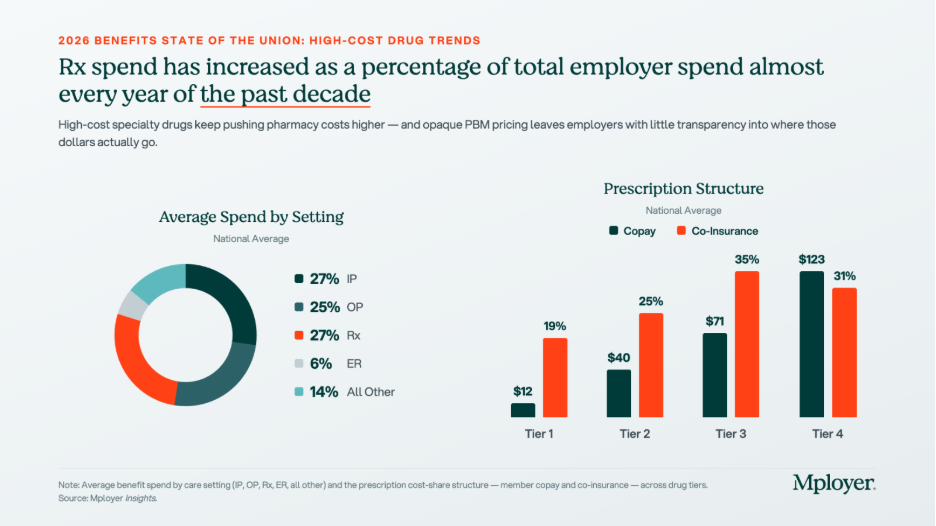
The tier structure in the chart above reflects how plans already account for the cost complexity of specialty drugs. Tier 4, which is where specialty biologics and injectables are typically placed, carries significantly higher cost-sharing than the other tiers: an average employee copay of $123 and coinsurance requirements in 31% of plans. But Tier 4 behaves very differently from the other tiers. On Tier 1, 2, and 3 drugs, cost-sharing is relatively predictable and manageable. On Tier 4, the combination of high drug cost and percentage-based coinsurance can generate out-of-pocket exposure that approaches or exceeds a patient’s annual out-of-pocket maximum in a single month of therapy. How Tier 4 is structured, what controls are in place, and how the plan manages cost is one of the most consequential design decisions an employer makes.

Understanding Your Benefit Plan’s Pharmacy Options

How Pharmacy Benefit Managers Work

Most employer health plans do not manage pharmacy benefits directly. That function is delegated to a Pharmacy Benefit Manager, or PBM, which acts as the intermediary between the health plan, the pharmacy, and the drug manufacturer. The PBM builds and maintains the formulary, negotiates drug prices and rebates with manufacturers, contracts with pharmacy networks, and processes pharmacy claims. The three dominant PBMs, Express Scripts (owned by Cigna), CVS Caremark (owned by CVS Health / Aetna), and OptumRx (owned by UnitedHealth Group), together manage the pharmacy benefits of approximately 80% of covered lives in the United States. Each is affiliated with a major carrier, meaning that employers who use an ASO medical arrangement often default to the carrier’s affiliated PBM without realizing it. Independent PBMs such as Capital Rx, Navitus, and MedOne Pharmacy Benefit Solutions operate on transparent, pass-through pricing models that return all rebates to the plan rather than retaining them as PBM revenue. PBMs are compensated through administrative fees, spread pricing (charging the plan more than the pharmacy receives and keeping the difference), manufacturer rebates in exchange for formulary placement, and specialty pharmacy margin. For any employer managing meaningful specialty drug spend, understanding which of these revenue sources applies to your contract is essential.

How Drug Tiers and Cost-Sharing Work

Every pharmacy benefit plan organizes covered drugs into tiers, with cost-sharing that increases as you move from Tier 1 generics (avg. $12 copay) through Tier 2 preferred brands ($40), Tier 3 non-preferred brands ($71), and into Tier 4 specialty drugs ($123 copay, with coinsurance in 31% of plans). The tier placement of a drug affects both what the employee pays and, indirectly, what the plan pays, since tier placement drives utilization patterns. Plan sponsors have real levers here: step therapy (requiring a patient to try a lower-cost drug first), prior authorization, specialty pharmacy channel mandates, and formulary exclusions all affect Tier 4 cost without eliminating clinical access. These controls require balancing cost management with the reality that for many specialty drugs, no lower-cost alternative achieves the same clinical outcome.

How Stop-Loss Insurance Interacts with High-Cost Drug Claims

For self-funded employers, specialty drug claims are now among the most common triggers for individual stop-loss reimbursement. A single employee on a cancer therapy or rare disease treatment can generate pharmacy claims that exceed the plan’s specific stop-loss deductible, which averages $141,938 nationally for self-insured plans, within a single plan year. The mechanics: the employer pays all claims up to the deductible threshold, and the stop-loss carrier reimburses costs above it. Several dynamics are specific to high-cost drugs. At renewal, stop-loss carriers may laser a known high-cost member by raising their individual deductible or excluding them from coverage. Some carriers now specifically carve out GLP-1 medications or other high-utilization drug categories from stop-loss reimbursement, so employers adding new drug coverage should verify what their contract covers. Specialty drugs can also be administered under either the pharmacy benefit or the medical benefit depending on whether they are self-administered or clinic-administered, and some stop-loss contracts apply different terms to each channel. Employers should model their actual specialty drug cost distribution against their stop-loss deductible at every renewal to understand where the plan’s real exposure sits.

The Costliest Specialty Drugs: What They Treat and What They Cost

The chart below shows the highest-cost specialty and biologic drugs by average cost per patient, ranked from most to least expensive. Cancer therapies dominate the top of the list, but treatments for autoimmune conditions, MS, and inflammatory disease also appear, reflecting how broadly specialty drug spending is distributed across a workforce.
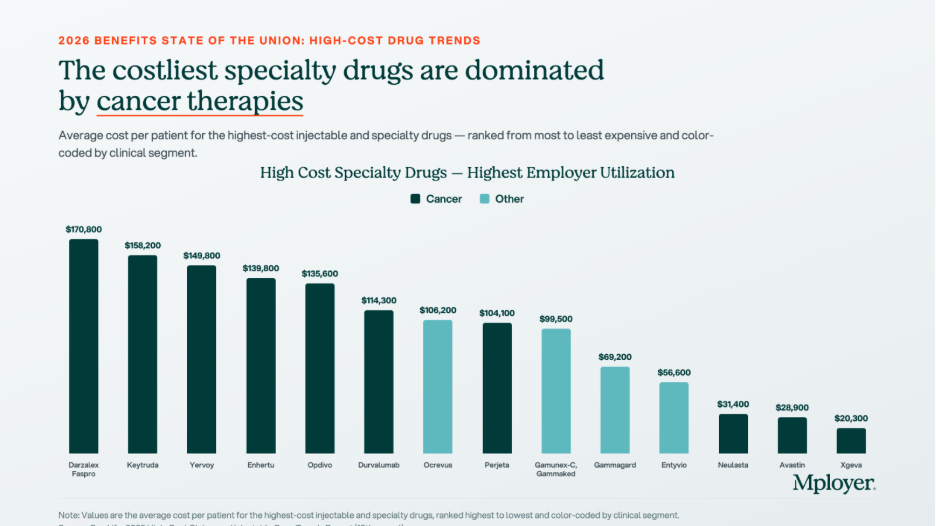
  • Darzalex Faspro (daratumumab/hyaluronidase) | $170,800 avg. annual cost per patient. Janssen (J&J). Multiple myeloma, a blood cancer. The highest-cost drug on the list by average patient cost. The subcutaneous formulation allows home administration, increasing the likelihood it flows through the pharmacy benefit rather than the medical benefit.
  • Keytruda (pembrolizumab) | $158,200 avg. annual cost per patient. Merck. FDA-approved across more than 40 cancer indications including lung, melanoma, head and neck, and bladder cancers. One of the most prescribed oncology drugs globally and one of the most common high-cost pharmacy claims in large employer plans.
  • Yervoy (ipilimumab) | $149,800 avg. annual cost per patient. Bristol-Myers Squibb. Melanoma and in combination with Opdivo for lung and other cancers. Combination Yervoy plus Opdivo therapy is among the highest per-patient drug cost regimens in common use.
  • Enhertu (trastuzumab deruxtecan) | $139,800 avg. annual cost per patient. AstraZeneca / Daiichi Sankyo. HER2-positive and HER2-low breast and gastric cancers. A significant recent clinical advance for patients with cancers that previously had limited options after first-line treatment.
  • Opdivo (nivolumab) | $135,600 avg. annual cost per patient. Bristol-Myers Squibb. Melanoma, lung, kidney, bladder, and other cancers. Frequently used in combination with Yervoy, compounding cost significantly when both are prescribed together.
  • Ocrevus (ocrelizumab) | $106,200 avg. annual cost per patient. Genentech. Relapsing and primary progressive multiple sclerosis. MS therapies are a persistent specialty drug cost driver because patients remain on therapy for years, making each diagnosed member a multi-year plan cost.
  • Entyvio (vedolizumab) | $56,600 avg. annual cost per patient. Takeda. Moderate-to-severe Crohn’s disease and ulcerative colitis. Inflammatory bowel disease therapies are among the most common specialty drug claims in employer plans because the conditions are prevalent in working-age adults.

Biosimilars: The Cost Opportunity Most Employers Are Not Fully Using

A biosimilar is a biologic drug that is highly similar to an already-approved reference biologic, with no clinically meaningful differences in safety, purity, or potency. Biosimilars are not generic drugs in the traditional sense, because biologic drugs are complex proteins manufactured from living cells and cannot be chemically replicated exactly. But they go through an FDA approval pathway that confirms their clinical equivalence to the reference product, and they cost significantly less. The biosimilar market has expanded rapidly as major biologic patents have expired. Humira, the world’s best-selling drug for much of the past decade, now has multiple biosimilar competitors in the U.S. Stelara has followed. The oncology biosimilar pipeline is maturing, with more approvals expected in the next two to three years.
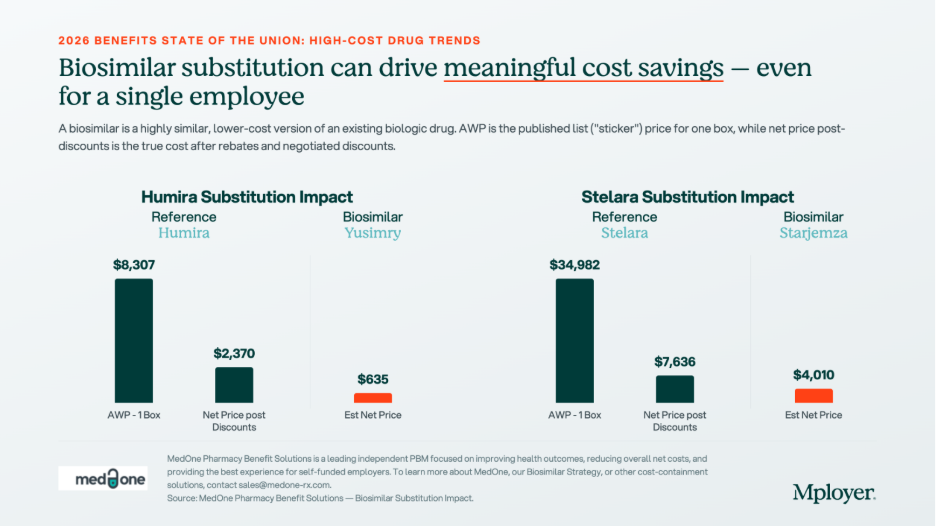
The chart above shows what biosimilar substitution looks like in dollar terms. For Humira, the net price after rebates and negotiated discounts is $2,370 per box. The biosimilar Yusimry has an estimated net price of $635, a 73% reduction. For Stelara, the reference drug net price is $7,636 per box. The biosimilar Starjemza has an estimated net price of $4,010, a 47% reduction. For an employee on monthly Humira therapy, the difference between the reference drug and the biosimilar is approximately $21,000 per year in net plan cost. For a Stelara patient, the annual difference is approximately $43,500. Across even a small number of members on these therapies, biosimilar substitution is one of the highest-return cost management interventions available.

Plan sponsors have four main tools to drive biosimilar adoption: preferred formulary placement (putting the biosimilar on a lower tier and the reference drug on a higher tier), step therapy for new patients, automatic substitution where state law permits, and formulary exclusion of the reference drug entirely. The most important variable in any biosimilar strategy is whether your PBM has a financial incentive to keep the reference drug preferred. A PBM earning a large rebate on Humira has a direct financial reason to keep Humira on the preferred formulary, even when the biosimilar costs the plan less on a net basis. Independent PBMs operating on pass-through pricing remove this conflict entirely, because all rebates return to the plan and formulary decisions are made without a competing financial interest.

What Employers Should Be Asking About Their Pharmacy Benefit

High-cost drug management requires active decisions about PBM contract structure, formulary design, specialty pharmacy strategy, and stop-loss alignment. The questions worth asking at every renewal:

  • Is your PBM contract pass-through or spread-based? A pass-through model means you pay exactly what the pharmacy receives and all rebates come back to the plan. A spread-based model means the PBM earns revenue that is not visible in the administrative fee. Request full compensation disclosure under the CAA requirements.
  • Are you receiving all available biosimilar savings? Ask your PBM for a net cost comparison of each reference drug plus rebate against the available biosimilar net price. The answer will tell you whether your formulary is designed around the plan’s cost interest or the PBM’s rebate interest.
  • What is your specialty drug channel strategy? Are specialty prescriptions being filled through your PBM’s affiliated specialty pharmacy? Carving specialty to an independent pharmacy or using a white-bagging program for clinic-administered drugs can generate meaningful cost differences.
  • How does your stop-loss deductible interact with your specialty drug exposure? Model your actual specialty drug claims against your stop-loss threshold. If most of your high-cost drug claims fall below the deductible, the plan is absorbing those costs without triggering reimbursement.
  • Does your formulary have appropriate Tier 4 controls? Step therapy, prior authorization, and quantity limits on specialty drugs reduce cost without eliminating clinical access. Without these controls, high-cost therapies can be approved and dispensed without any plan-level review of whether a lower-cost alternative exists.

Know How Your Pharmacy Benefit Compares

Pharmacy is now one of the two or three most consequential cost management decisions in health plan design. The employers managing it well are not restricting access to the medications their employees need. They are ensuring that the structure of the benefit, the PBM contract, the formulary design, and the stop-loss coverage work together in the plan’s interest, and that every dollar spent on high-cost drugs is spent as efficiently as possible.

Mployer’s benefits rating evaluates pharmacy benefit design as part of the Medical pillar score, benchmarked against a custom cohort matched by size, region, and industry. Knowing where your pharmacy benefit stands relative to employers who actually look like you is the starting point for making better decisions.

See how your benefits package compares to your custom cohort at MployerAdvisor.com.

Sources

Mployer Insights: Average Spend by Setting, Prescription Structure, and High-Cost Specialty Drugs. Source: Mployer Insights analysis.

MedOne Pharmacy Benefit Solutions: Biosimilar substitution impact data for Humira/Yusimry and Stelara/Starjemza. MedOne is a leading independent PBM focused on improving health outcomes and reducing net costs for self-funded employers. [email protected].

Mployer 2025 and 2026 Employee Benefit Plan Design Study, covering 50,000+ employer plans. Individual stop-loss avg $141,938 self-insured.

Consolidated Appropriations Act of 2021, Section 202: broker/consultant compensation disclosure requirements for group health plans.

FDA Biosimilar approval framework: 42 U.S.C. Section 262(k).
Important Holidays
US Employers Guide to Holi
The date varies, but Holi usually falls in March. Known as the Festival of Colors, Holi marks the arrival of spring. Participants throw colored powders and water at each other, symbolizing the triumph of good over evil and the joy of life.
December 14, 2023

Holi, the vibrant and joyous festival of colors, is one of the most celebrated Hindu festivals in India. As a US-based employer, understanding and acknowledging Holi can foster cultural inclusivity and strengthen bonds with employees from Indian backgrounds. This guide provides insights into specific dates, the level of importance, background on the holiday, cultural practices, ways to celebrate as a US employer, and important legal and compliance considerations.

Specific Dates to Keep in Mind

Holi is a spring festival and usually falls between late February and March. The main day of celebration, known as Dhulandi or Rangwali Holi, involves the playful throwing of colored powders and water.

Level of Importance

Holi holds high importance in India, marking the arrival of spring and symbolizing the triumph of good over evil. It is celebrated with enthusiasm and exuberance across the country.

Background on the Holiday

Holi has its roots in Hindu mythology, particularly the legend of Prahlad and Holika. It is a time for joy, love, and the breaking down of social barriers. The festival encourages forgiveness and the renewal of relationships.

Specific Cultural Practices

  • Playing with Colors: Participants engage in color fights, smearing each other with brightly colored powders.
  • Water Balloon Fights: Water-filled balloons are thrown, adding an extra element of fun to the celebrations.

Traditional Foods

  • Special Holi delicacies like gujiya, mathri, and thandai are prepared and shared.

Specific Items

Participants usually wear old or white clothing that can easily be colored during the festivities. Wearing sunglasses and applying oil to the skin before playing with colors is common.

Specific Foods

Holi is associated with a variety of special sweets and beverages. Thandai, a spiced milk drink, is a traditional Holi favorite.

Celebrating Holi as a US Employer

Understanding and acknowledging Holi can contribute to a more inclusive workplace. Here's how:

  • Flexible Scheduling: Consider allowing flexible work hours to accommodate Holi celebrations.
  • Virtual Celebrations: Host virtual events or encourage employees to share their Holi experiences and traditions.

Communicating Holi to Your Teams

Subject: Celebrating Holi - Embracing the Festival of Colors

Dear [Team],

As we approach the vibrant festival of Holi, we want to extend warm wishes to all our team members celebrating this Festival of Colors. Holi is a time of joy, love, and the triumph of good over evil.

We encourage you to take part in the festivities, whether it's playing with colors, enjoying traditional foods, or simply embracing the spirit of renewal. Let's celebrate the diversity of our team and make this Holi a colorful and memorable one.

May your lives be filled with the colors of joy and happiness.

Warm regards, [Your Company]

Legal and Compliance

  • Accommodations: Be aware of potential time off requests and accommodate employees who observe Holi.
  • Cultural Sensitivity: Ensure that workplace celebrations and communications are culturally sensitive and respectful.

By recognizing and respecting Holi, US employers can create a workplace culture that values diversity, fosters inclusivity, and embraces the rich tapestry of cultural traditions.

Important Holidays
US Employers Guide to Diwali (Deepavali)
The date varies, but Diwali usually takes place in October or November. Also known as the Festival of Lights, Diwali is one of the most significant Hindu festivals. It symbolizes the victory of light over darkness and good over evil. People celebrate with decorations, diyas (oil lamps), fireworks, sweets, and exchanging gifts.
December 14, 2023

Diwali, also known as Deepavali, is one of the most widely celebrated festivals in India and holds great cultural significance. As a US-based employer, understanding and recognizing Diwali can foster a more inclusive workplace environment and strengthen relationships with employees of Indian origin. This guide provides insights into specific dates, the level of importance, background on the holiday, cultural practices, ways to celebrate as a US employer, and important legal and compliance considerations.

Specific Dates to Keep in Mind

Diwali is a floating festival, and its date is determined by the Hindu lunar calendar. It usually falls between October and November. The main day, known as Diwali or Deepavali, is celebrated on the third day of the festival.

Level of Importance

Diwali is of high importance in India, not only for Hindus but also for Jains, Sikhs, and some Buddhists. It is a time for family gatherings, festive activities, and spiritual reflection.

Background on the Holiday

Diwali, the Festival of Lights, signifies the triumph of light over darkness and good over evil. The celebration involves the lighting of oil lamps or diyas, decorating homes, exchanging gifts, and enjoying festive meals.

Specific Cultural Practices

  • Lighting of Diyas: Diyas are lit to symbolize the victory of light over darkness and knowledge over ignorance.
  • Rangoli: Intricate designs made on the floor with colored powders or flowers.
  • Fireworks: Fireworks are a traditional part of Diwali celebrations, symbolizing the victory of good over evil.

Specific Items

While there are no strict rules about items to avoid, it's common for people to wear new or traditional clothing during Diwali.

Specific Foods

Diwali is associated with a variety of special sweets and savory snacks. Traditional Indian sweets like laddoos, barfis, and jalebis are often prepared and shared.

Celebrating Diwali as a US Employer

Understanding Diwali allows US employers to foster a sense of inclusion. Here's how:

  • Flexible Scheduling: Consider allowing flexible work hours or time off to accommodate Diwali celebrations.
  • Virtual Celebrations: Host virtual events or encourage employees to share their Diwali experiences and traditions.

Communicating Diwali to Your Teams

Subject: Celebrating Diwali - Embracing the Festival of Lights

Dear [Team],

As we approach the joyous festival of Diwali, we want to extend warm wishes to all our team members celebrating this Festival of Lights. Diwali holds immense cultural significance and symbolizes the victory of light over darkness.

We encourage you to take this opportunity to share your Diwali traditions with the team. Whether you light diyas, create rangolis, or enjoy festive meals, let's embrace the diversity of our team's celebrations.

May this Diwali bring joy, prosperity, and a bright future to you and your loved ones.

Warm regards, [Your Company]

Legal and Compliance

  • Accommodations: Be aware of potential time off requests and accommodate employees who observe Diwali.
  • Cultural Sensitivity: Ensure that workplace celebrations and communications are culturally sensitive and respectful.

By recognizing and respecting Diwali, US employers can contribute to a more inclusive workplace, fostering a positive atmosphere that values cultural diversity and understanding.

Important Holidays
US Employers Guide to Canada's Civic Day
Canada's Civic Holiday is on the first Monday in August. Known by different names in various provinces, this day is a public holiday, often celebrated as a midsummer day off with various local events and activities.
December 13, 2023

Canada's Civic Day, celebrated on the first Monday of August, offers a unique opportunity for US-based employers to understand and recognize this regional holiday. As each province may have its own variations, it's essential for HR, benefit, and compliance leaders to foster a workplace culture that appreciates the diversity of Canadian holidays. This guide delves into specific dates, the level of importance, background on the holiday, cultural practices, ways to celebrate as a US employer, and important legal and compliance considerations.

Specific Dates to Keep in Mind

Canada's Civic Day falls on the first Monday of August. It is a fixed date, allowing for consistent planning.

Level of Importance

The level of importance for Civic Day varies by province. While it is a statutory holiday in some regions, others may not observe it or may have different names for the holiday.

Background on the Holiday

Civic Day, often referred to by different names like British Columbia Day, Saskatchewan Day, or Simcoe Day in Ontario, is a celebration of civic pride and community. It provides an opportunity for Canadians to engage in various recreational and cultural activities.

Specific Cultural Practices

Civic Day is often marked by community events, parades, fireworks, and outdoor activities. Residents take pride in their local heritage and participate in festivities that reflect their community spirit.

Specific Items

While there are no specific items associated with Civic Day, individuals may wear clothing or accessories that showcase their community pride.

Specific Foods

Civic Day is not tied to specific foods, but community barbecues, picnics, and outdoor gatherings are common. Consideration for dietary preferences and restrictions is advisable when organizing workplace events.

Celebrating Civic Day as a US Employer

Understanding the regional differences in Canada is crucial when acknowledging Civic Day. Here are ways to celebrate as a US employer:

  • Flexible Scheduling: Be aware of potential time zone differences and allow flexibility for Canadian employees to celebrate the holiday.
  • Virtual Celebrations: Host virtual events or team-building activities that align with the spirit of Civic Day.

Communicating Civic Day to Your Teams

Subject: Celebrating Canada's Civic Day - A Time for Community Pride

Dear [Team],

As we approach Canada's Civic Day on the first Monday of August, we want to extend our warm wishes to our Canadian colleagues and celebrate the spirit of community pride. While this holiday may have different names across provinces, it represents a time for reflection, recreation, and a celebration of our unique communities.

We encourage you to take this opportunity to connect with your local community, whether virtually or in person, and engage in activities that bring a sense of civic pride. If you have any specific traditions or activities you'd like to share, feel free to let us know.

Wishing you all a happy Civic Day!

Sincerely, [Your Company]  

Legal and Compliance

  • Accommodations: Be mindful of potential time off requests and accommodate employees who observe Civic Day, especially those in regions where it is a statutory holiday.
  • Inclusivity: Acknowledge the diversity of celebrations across Canada and foster an inclusive environment that respects regional differences.

By recognizing and respecting Civic Day, US employers can contribute to a positive and inclusive workplace culture, strengthening the bond between American and Canadian colleagues.

Important Holidays
US Employers Guide to Remembrance Day (Canada)
Remembrance Day is a Canadian holiday that takes place on November 11. Canadians observe Remembrance Day to honor the military personnel who lost their lives in the line of duty. The day is marked by ceremonies at war memorials, including the National War Memorial in Ottawa.
December 13, 2023

Remembrance Day in Canada is a solemn occasion dedicated to honoring the sacrifices of the country's veterans and military personnel. As a US-based employer, understanding the significance of Remembrance Day is crucial for fostering a respectful and inclusive workplace. In this guide, we'll explore the specific dates, the level of importance, the background of the holiday, cultural practices, and how US employers can appropriately recognize and communicate about Remembrance Day while considering legal and compliance aspects.

Specific Dates to Keep in Mind

Remembrance Day is observed on November 11th each year. The date is fixed.

Level of Importance

Remembrance Day holds high importance in Canada and is a statutory holiday in most provinces. It is a day of reflection, gratitude, and commemoration for the sacrifices made by Canadian armed forces.

Background on the Holiday

Remembrance Day originated as Armistice Day in 1919 to mark the end of World War I. It was later expanded to honor all military personnel who have served in the Canadian Armed Forces. The red poppy flower is a symbol of remembrance inspired by the famous war poem "In Flanders Fields."

Specific Cultural Practices

  • Two-Minute Silence: A nationwide two-minute silence is observed at 11 a.m. to honor and remember the fallen.
  • Wearing Poppies: Canadians wear red poppies as a symbol of remembrance.

Specific Items

  • Red Poppies: Displaying or wearing red poppies is a common practice to show respect and support for veterans.

Specific Foods

Remembrance Day is not associated with specific foods. However, events like community breakfasts or dinners may be organized to bring people together.

Celebrating Remembrance Day as a US Employer

While Remembrance Day is not widely observed in the United States, recognizing its importance to Canadian employees can strengthen workplace morale. Here are some ways to acknowledge the day:

  • Moment of Silence: Observe a moment of silence at 11 a.m. in honor of Remembrance Day.
  • Poppies: Encourage employees to wear red poppies or display them in the workplace.

Communicating Remembrance Day to Your Teams

Subject: Observing Remembrance Day - Honoring Canadian Veterans

Dear [Team],

As we approach November 11th, we want to take a moment to recognize and honor Remembrance Day in Canada. This important day serves as a time of reflection, gratitude, and remembrance for the sacrifices made by the country's veterans.

We encourage you to observe a two-minute silence at 11 a.m. on November 11th as a sign of respect. Additionally, wearing red poppies is a meaningful way to show support for our Canadian colleagues and all those who have served.

Let us join together in honoring the memory of the brave men and women who have made sacrifices for our freedom.

Sincerely, [Your Company]

Legal and Compliance

  • Respectful Communication: Ensure that any communication about Remembrance Day is respectful and acknowledges the solemn nature of the occasion.
  • Accommodations: Be understanding and supportive if Canadian employees request time off or adjustments to observe Remembrance Day traditions.

By recognizing Remembrance Day, your company can demonstrate empathy and respect for the contributions of Canadian veterans, contributing to a workplace culture that values diversity and inclusivity.

Important Holidays
US Employers Guide to Canada Day
Also known as Canada's birthday, July 1 is a national holiday that celebrates the anniversary of the confederation in 1867. Canadians commemorate the day with fireworks, parades, concerts, and various patriotic events.
December 13, 2023

Canada Day, celebrated on July 1st each year, marks the anniversary of the confederation of Canada. While it is a national holiday for our neighbors to the north, as a US-based employer, understanding and acknowledging this day can foster cross-cultural awareness and inclusivity within your workplace. In this guide, we will explore specific dates, the level of importance, the background of the holiday, cultural practices, and how US employers can appropriately recognize and communicate about Canada Day, all while considering legal and compliance aspects.

Specific Dates to Keep in Mind

Canada Day is a fixed date celebrated annually on July 1st.

Level of Importance

Canada Day holds high importance in the country, akin to the significance of Independence Day in the United States. It is a federal holiday, and Canadians across the country participate in various events and activities to celebrate their national identity.

Background on the Holiday

Canada Day commemorates the enactment of the Constitution Act, 1867, which united the separate colonies of the United Province of Canada into a single Dominion within the British Empire. It signifies the birth of the nation.

Specific Cultural Practices

  • Fireworks Displays: Fireworks are a central part of Canada Day celebrations, with cities hosting spectacular displays.
  • Parades and Festivals: Communities organize parades, concerts, and festivals featuring Canadian music, art, and culture.

Specific Items

  • Red and White: The national colors of Canada are red and white. Many Canadians wear clothing featuring these colors, and decorations often follow the red and white theme.

Specific Foods

  • Canadian Cuisine: Celebrations may include traditional Canadian foods, such as poutine, butter tarts, and maple-flavored treats.

Celebrating Canada Day as a US Employer

While Canada Day is not a holiday in the United States, recognizing its importance can create a more inclusive work environment. Here are ways to acknowledge the day:

  • Educational Sessions: Provide information about the history and significance of Canada Day to enhance employees' understanding of their Canadian counterparts.
  • Virtual Celebrations: Consider hosting virtual events or allowing employees to join Canadian celebrations online.
  • Social Media Acknowledgment: Share a post on your company's social media platforms, acknowledging Canada Day and expressing appreciation for the cultural diversity within the team.

Communicating Canada Day to Your Teams

Subject: Celebrating Canada Day - A Message of Unity

Dear [Team],

As July 1st approaches, we want to take a moment to acknowledge Canada Day, a significant celebration for our Canadian colleagues and friends.

While Canada Day is not a holiday in the United States, we recognize the importance of this day to our neighbors to the north. It's a time for Canadians to celebrate their rich history, culture, and national identity.

We encourage you to learn more about Canada Day and take part in recognizing the contributions of our Canadian colleagues. Let's celebrate the diversity that makes our team strong and vibrant.

Happy Canada Day!

Warm regards, [Your Company]

Legal and Compliance

  • Inclusive Language: Use inclusive language that respects the cultural diversity of your team.
  • Respect for Differences: Ensure that any celebrations or acknowledgments are respectful of individual preferences, and participation is voluntary.
  • Compliance with Work Policies: Remind employees of work policies regarding virtual celebrations during work hours.

Acknowledging Canada Day demonstrates your company's commitment to cultural understanding and inclusivity, contributing to a workplace where all employees feel valued and appreciated.

Important Holidays
US Employers Guide to Labor Day (Mexico)
Mexico’s Labor Day is on May 1 each year. Similar to International Workers' Day, Mexicans observe Labor Day with parades, demonstrations, and events advocating for workers' rights.
December 13, 2023

Labor Day, or "Día del Trabajo," is a significant holiday in Mexico that honors the achievements and contributions of workers. As a US-based employer, understanding and respecting this day can contribute to fostering cultural awareness and inclusivity within the workplace. In this guide, we will explore specific dates, the level of importance, the background of the holiday, cultural practices, and how US employers can appropriately acknowledge and communicate about Labor Day while considering legal and compliance aspects.

Specific Dates to Keep in Mind

Labor Day in Mexico is celebrated on May 1st each year. This date is fixed, providing clarity for planning and recognition.

Level of Importance

Labor Day holds high importance in Mexico, where it is a public holiday. It is a day to recognize the achievements and rights of workers, and various events and activities take place nationwide.

Background on the Holiday

Labor Day has its roots in the labor movement of the late 19th century and is a day dedicated to celebrating the contributions of workers to society. In Mexico, it is a time to acknowledge the achievements of the labor movement and advocate for workers' rights.

Specific Cultural Practices

  • Parades and Demonstrations: Cities and towns across Mexico organize parades and demonstrations to celebrate workers' contributions and advocate for labor rights.
  • Union Involvement: Labor unions play a significant role in organizing events and advocating for workers' rights on this day.

Specific Items

Red Flags and Banners: Red is a symbolic color associated with Labor Day. Many participants in parades and events carry red flags, banners, or wear red clothing to show solidarity.

Specific Foods

  • Traditional Mexican Cuisine: Celebrations may include traditional Mexican foods, offering a communal gathering for workers and their families.

Celebrating Labor Day as a US Employer

While Labor Day in the United States is celebrated on a different date, acknowledging the significance of Labor Day in Mexico demonstrates cultural sensitivity. Here are ways to acknowledge the day:

  • Educational Sessions: Provide information about the history and significance of Labor Day in Mexico to promote understanding among employees.
  • Inclusive Decorations: Consider incorporating red elements or flags in common areas to symbolize solidarity with workers.
  • Acknowledgment in Communications: Include a brief mention of Labor Day in Mexico in company communications or newsletters, fostering cultural awareness.

Communicating Labor Day to Your Teams

Subject: Celebrating Labor Day - Recognizing the Achievements of Workers

Dear [Team],

As May 1st approaches, I wanted to take a moment to acknowledge Labor Day in Mexico. This important day celebrates the achievements and contributions of workers, recognizing their role in shaping our society.

While we celebrate Labor Day in the United States on a different date, it is an opportunity for us to foster cultural awareness and understanding. I encourage you to take a moment to learn more about the history and significance of this day.

If you have any questions or would like more information, feel free to reach out. Let's celebrate the hard work and dedication of workers around the world.

Warm regards, [Your Company]

Legal and Compliance

  • Inclusive Language: Use inclusive language in communications to recognize the diversity of backgrounds and beliefs within the workplace.
  • Cultural Sensitivity Training: Consider offering cultural sensitivity training to employees to promote an inclusive work environment.
  • Voluntary Participation: If organizing any workplace events, ensure that participation is voluntary and does not create discomfort for employees.

Acknowledging and respecting Labor Day in Mexico reflects positively on your company's commitment to cultural diversity and inclusivity, contributing to a workplace where all employees feel valued and understood.